
OWASP Top 10
Broken access control, injection, security misconfiguration, SSRF, authentication failures, insecure design, integrity and component risks, plus logging and cryptography weaknesses.
Our specialized AI agents pursue attack paths, test hypotheses and validate reproducible vulnerabilities instead of merely matching known signatures.
Substantially deeper than vulnerability scanning: agents automate many technical pentest steps, examine the target from multiple perspectives and indicate where human-led depth is worthwhile.

An AI-guided pentest is an authorized security assessment in which specialized AI agents explore a web application or API, develop attack hypotheses and test them with real requests. The agent follows interesting responses, changes its strategy and collects reproducible evidence instead of merely processing a list of known signatures.
It can automate many steps of manual penetration testing: mapping endpoints and parameters, comparing roles, examining sessions, adapting payloads to context, trying bypass variants, correlating anomalies and pursuing potential attack chains. This provides substantially more perspective and depth than conventional vulnerability scanning.
An experienced human remains superior for complex business logic, architecture decisions and a defensible overall assurance statement. AI-guided testing is therefore not a relabelled manual penetration test, but it is a much more capable and adaptive assessment than automated scanning.
An AI agent can already perform a substantial share of technical pentest work. The principal differences are contextual understanding, assurance and the depth of complex business-logic testing.
| Characteristic | Vulnerability scan | AI-guided pentest | Manual pentest |
|---|---|---|---|
| Approach | Predefined checks and signatures | Adaptive agents, tools and hypotheses | Creative, context-aware attacks |
| Exploration | Known paths and fingerprints | Actively explores endpoints, states and relationships | Targeted exploration with architecture and product insight |
| Authentication | Often superficial | Sessions, roles and object access with test accounts | Systematic testing across complex roles and workflows |
| OWASP Top 10 | Technically detectable subset | Broad adaptive coverage of all categories in reachable scope | Broad coverage with deeper context |
| Bypasses and variants | Very limited | Payload, encoding, redirect and workflow variants | Highly flexible, including unusual controls |
| Attack chains | Individual signals | Correlation and bounded multi-step paths | Complex chains across systems and processes |
| Business logic | Barely assessable | Simple to intermediate logic and state transitions | Complex workflows, abuse cases and business context |
| Result | Broad technical noise | Validated findings and a strong signal for further testing | Deep assurance with human overall assessment |
| Replacement for a manual pentest? | No | No - but substantially closer | Reference for maximum assurance |
The assessment is not limited to a handful of demo categories. Within the agreed and technically reachable scope, our workflows cover the OWASP Top 10 as well as complex bypasses, infrastructure weaknesses and chained attacks.
Broken access control, injection, security misconfiguration, SSRF, authentication failures, insecure design, integrity and component risks, plus logging and cryptography weaknesses.
IDOR/BOLA, horizontal and vertical privilege escalation, role and tenant separation, hidden functions, mass assignment and inconsistent API authorization.
Alternative encodings, parser discrepancies, redirect chains, filter and WAF bypasses, state transitions, race-like workflows and unexpected request sequences.
SSRF into internal services, exposed debug and admin paths, cloud metadata, secrets, storage misconfiguration, host and proxy trust, and reachable internal components.
SQL/NoSQL and command injection, XSS across contexts, XXE, template injection, path traversal, insecure uploads, parsers and deserialization.
A seemingly minor disclosure can be linked to missing authorization, server-side access or session weaknesses to determine its true combined impact.
Coverage is not a guarantee of findings: meaningful testing depends on the target, supplied accounts, functionality, security controls and the agreed time and compute budget.
We select models and execution environments according to data classification, scope and required depth rather than forcing every client into the same stack.
For authorized client engagements, we have verified access for real cybersecurity workflows. Depending on scope and availability, we use models including Claude Fable 5 and GPT‑5.6 Sol through OpenAI Daybreak.
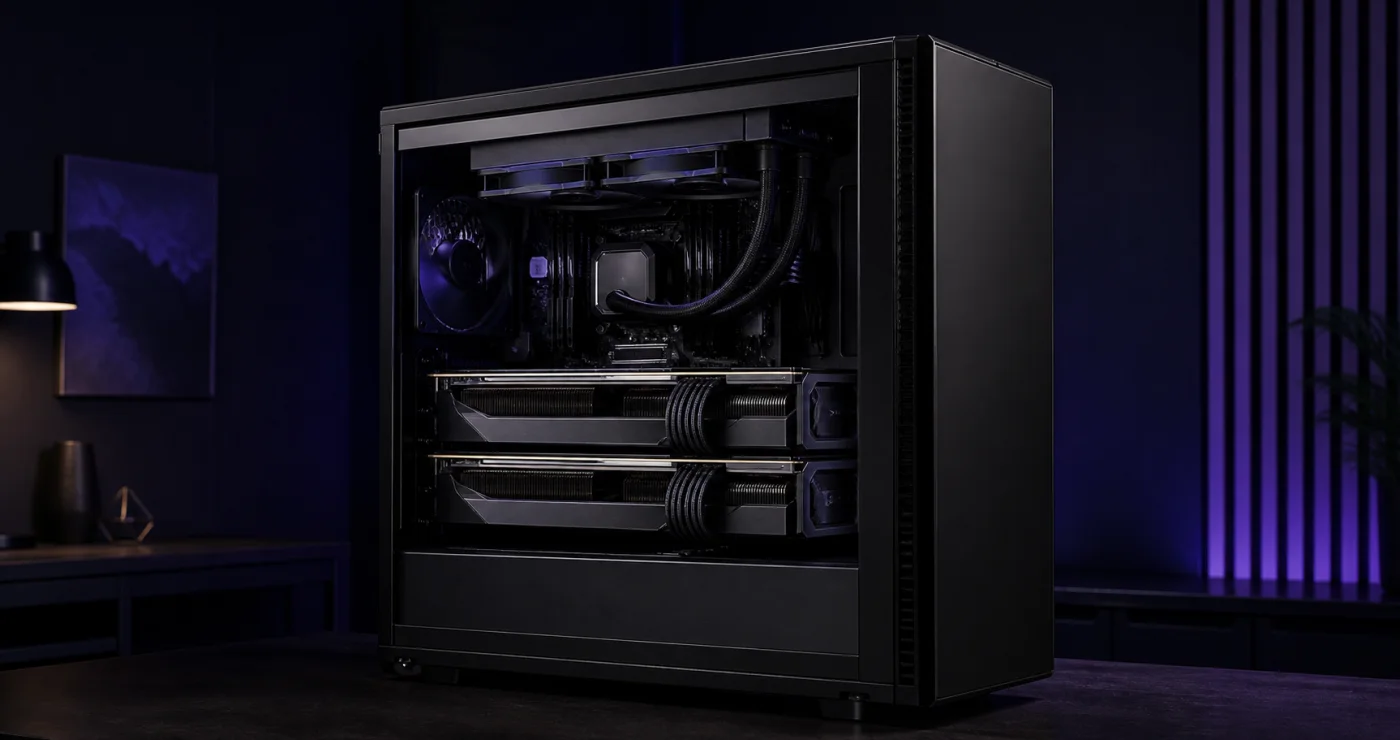
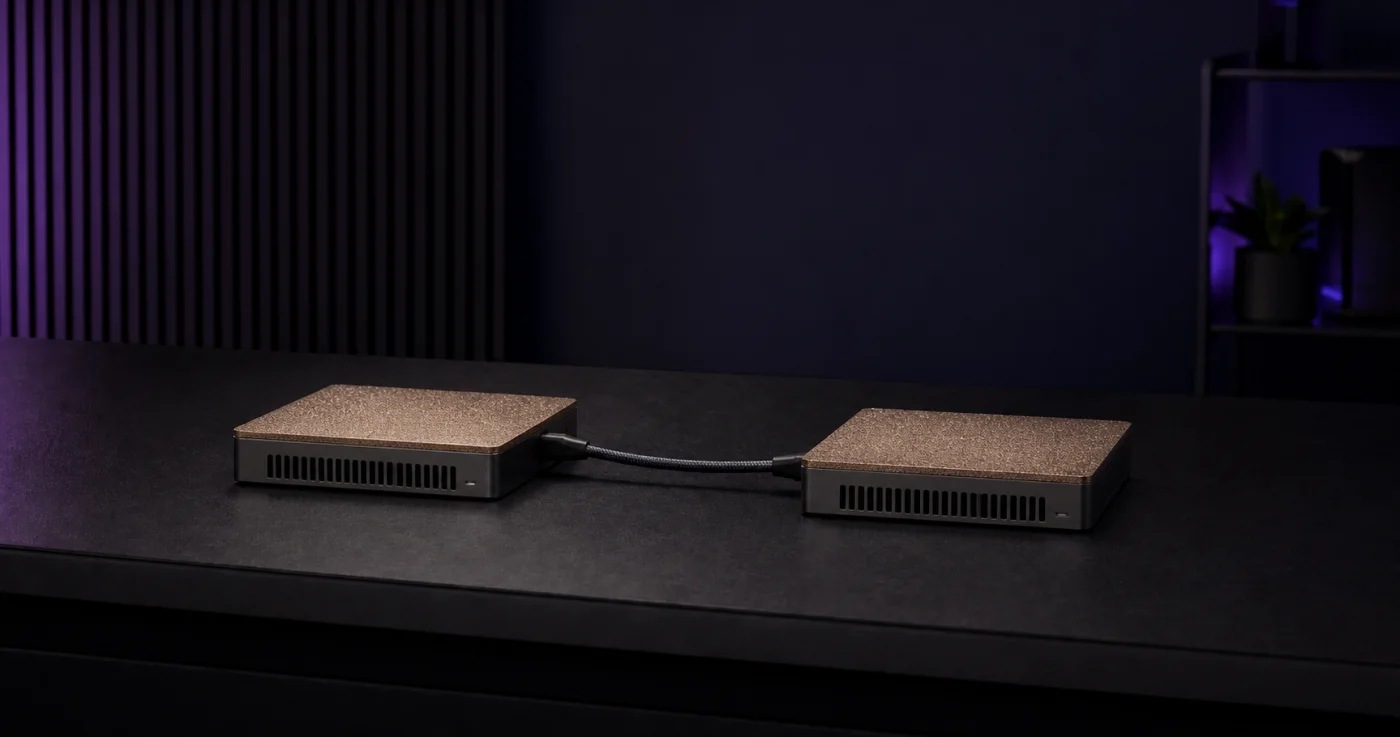
When assessment data must not reach external servers, open-weight large language models run entirely on our own hardware. Prompts, responses, artifacts and test data remain inside the controlled local environment.
One agent maps the target, another searches for counterexamples or bypasses, security tools provide measurements and a separate run validates reproducibility. The result does not depend on a single answer.
Hosts, test accounts, stop rules and remote or local AI are agreed before testing begins.
Agents map endpoints, roles, parameters, technologies, visible infrastructure and state transitions.
Different models and toolchains pursue OWASP categories, bypasses and newly formed hypotheses.
Signals are reproduced, correlated and pursued safely until their impact can be substantiated.
A human reviews evidence, scope compliance and significance, then recommends the appropriate next level of testing.
We do not develop these workflows solely in a demo lab. Our testers use them in authorized bug bounty programs to cover broad attack surfaces, identify unusual relationships and prepare valid reports.
The agent compared object IDs, roles and response patterns, developed alternative request sequences and proved unauthorized data access across account boundaries.
Behavior in a URL importer led to server-side request hypotheses. Redirects, encodings and host representations were varied and reachable internal targets systematically validated.
The AI identified why standard payloads failed, modelled parser and output context, and generated variants that bypassed the specific filter in a controlled way.
Related routes, hostnames and response structures were correlated to generate new path candidates exposing sensitive metadata and internal functions.
Target names and technical details remain confidential under program rules. Human review before submission provides quality assurance; exploration, hypothesis formation and the technical discovery itself can originate entirely from the AI workflow.
The Mini Pentest provides a full day of manual testing to investigate business logic, bypasses and potential attack chains in depth.
The fixed-price assessment is a deliberately bounded but meaningful entry point. It provides more depth than a scan and a strong technical signal: if the attack surface is uneventful, regular scanning may be sufficient. If interesting paths emerge, a manual mini pentest, a full assessment or a larger AI scope can focus directly on them.
A complex pentest can also be performed largely or entirely by AI agents. Doing so requires multiple agents and models to run for extended periods, challenge each other's results and process large contexts. Model and token costs alone for this type of project are typically in the €1,000-€2,000 range, before orchestration, secure infrastructure, review and reporting.
We quote these AI-only scopes individually. For critical business logic, compliance evidence and maximum assurance, a manual or hybrid penetration test is often the most appropriate option.
For €899, you receive the complete AI-guided assessment and a concise technical handover. Add a formally prepared findings PDF or verification of remediated vulnerabilities only when you actually need them.
Clear answers about testing depth, models, data and cost.
No. A scanner mainly runs predefined checks. Our agents explore endpoints and states, form hypotheses, modify requests, try bypasses and pursue relationships. This creates substantially more depth and perspective.
Not completely. Much technical pentest work can be automated, but complex business logic, unusual role models, architecture decisions and maximum assurance still benefit from human experience. AI-only and hybrid scopes are both available.
The price covers one clearly bounded web or API target with a fixed runtime and compute budget, adaptive exploration, reproducible findings, a technical quality gate and recommended next steps. A formally prepared findings PDF is optional for €499 and a re-test for €399; additional scope is agreed individually.
Yes, this is technically possible. It requires multiple agents and models to run for extended periods and challenge each other's results. Model and token costs alone are often €1,000-€2,000, before orchestration, infrastructure, review and reporting. We therefore quote complex AI-only projects individually.
Depending on scope, we use current frontier models such as Claude Fable 5 and GPT‑5.6 Sol through verified cyber access, or capable open models on our local clusters. We commonly combine models to obtain different perspectives and independent validation.
No. For sensitive scopes, all models can run on our own hardware with 2× RTX 4090 and 2× NVIDIA DGX Spark. Prompts, responses and assessment artifacts then remain local. The data mode is agreed transparently before engagement.
In principle, yes, when scope, rate limits and stop rules make this safe. A test environment is preferred. Destructive actions, denial of service, data modification and access outside the agreed scope remain excluded.
Yes. Adaptive testing provides a much stronger signal than a scanner. We state whether regular scanning is likely sufficient, a focused mini pentest is appropriate, or complex attack paths justify a full manual or hybrid penetration test.
Have questions about our services? We'd be happy to advise you and create a customized offer.
We'll get back to you within 24 hours
Your data will be treated confidentially
Direct contact with our experts
